How to Start Freelancing With Zero Experience (Beginner’s Step-by-Step Guide)
Learn how to begin freelancing from home, build skills, find clients, and earn safely even if you are a complete beginner
Introduction
Freelancing has become one of the most popular ways to work online. Many students, homemakers, and professionals are choosing freelancing because it offers flexibility, independence, and the ability to work from home. The best part is that you don’t need years of experience or a big investment to start. With basic skills and internet access, anyone can begin their freelancing journey.
If you are new and wondering how to start without experience, don’t worry. Every successful freelancer started as a beginner. This guide explains simple steps to build skills, find your first client, and grow steadily without unrealistic promises or risky shortcuts.
What is Freelancing?
Freelancing means offering your services to clients on a project or task basis instead of working full-time for one company.
Examples of freelance work:
- Writing articles
- Graphic design
- Video editing
- Data entry
- Social media management
- Website development
You get paid per project, per hour, or per task.
Step 1: Choose One Skill First
Many beginners try to learn everything at once. This creates confusion.
Start with one skill only.
Beginner-friendly skills:
- Content writing
- Graphic design (Canva)
- Basic video editing
- Virtual assistance
- Data entry
- Social media posting
Pick something you enjoy and can practice daily.
Example: If you like writing, start blog writing or copywriting.
Step 2: Learn for Free
You don’t need expensive courses.
Free learning sources:
- YouTube tutorials
- Free online courses
- Practice projects
- Blogs and guides
Spend 2–3 weeks practicing. Create small sample work like:
- 2 articles
- 3 designs
- 1 demo video
These will become your portfolio.
Step 3: Create a Simple Portfolio
Clients want proof of your work.
A portfolio shows:
- Your skills
- Example projects
- Contact details
You can use:
- Google Drive
- Notion
- Free websites
Even 3–4 samples are enough for beginners.
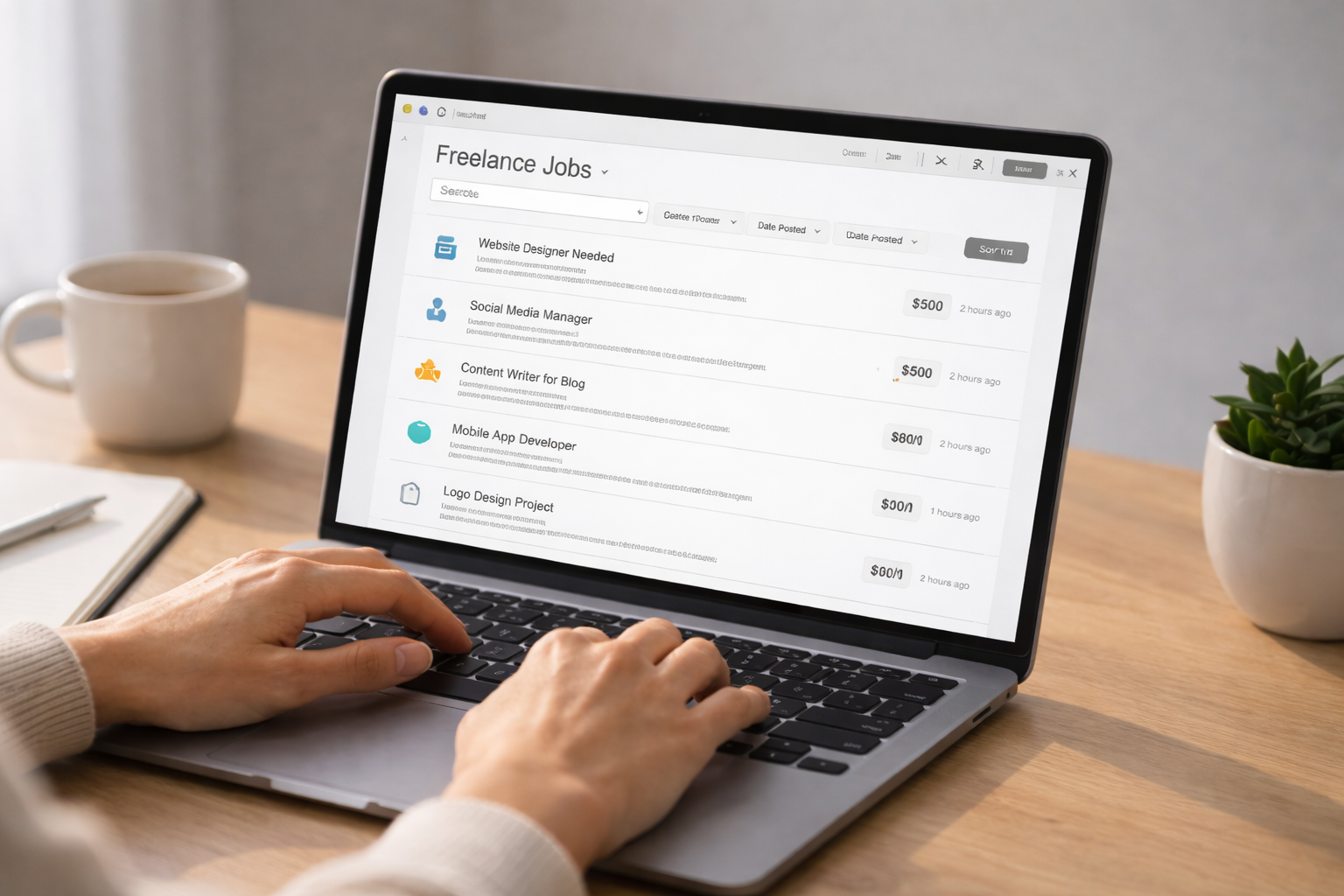
Step 4: Join Freelancing Platforms
These platforms help you find clients easily.
Popular options:
- Fiverr
- Upwork
- Freelancer
- PeoplePerHour
Create a professional profile:
- Clear photo
- Simple description
- Mention your skill
- Add samples
Avoid copying others. Write honestly.
Step 5: Get Your First Client
Your first project may pay less, and that’s okay.
Focus on:
- Experience
- Reviews
- Learning
Tips:
- Send personalized proposals
- Keep prices beginner-friendly
- Respond quickly
- Deliver on time
Good reviews help you grow faster.
Step 6: Improve Skills and Increase Rates
Once you complete 5–10 projects:
- Improve quality
- Learn advanced tools
- Increase prices gradually
Don’t stay stuck at low rates.
Freelancing is a long-term growth process.
Mistakes to Avoid
- Expecting instant income
- Copying others’ work
- Missing deadlines
- Ignoring communication
- Joining fake job offers
Always use trusted platforms.
Conclusion
Freelancing is a practical and safe way to earn online if you are patient and consistent. You don’t need experience or money to start. Learn one skill, build samples, join platforms, and deliver quality work. Over time, your income and confidence will grow naturally.
Start small today, and improve step by step.
FAQs
1. Can beginners really start freelancing?
Yes. Many people start without experience by learning simple skills.
2. How long does it take to get first client?
Usually 2–4 weeks with regular effort.
3. Is freelancing safe?
Yes, if you use trusted platforms and avoid scams.
About the Author

Kishan
Helping Businesses Turn Ideas into High-Quality Digital Products
I’m a Software Developer who helps businesses and startups turn ideas into functional, high-performa...